

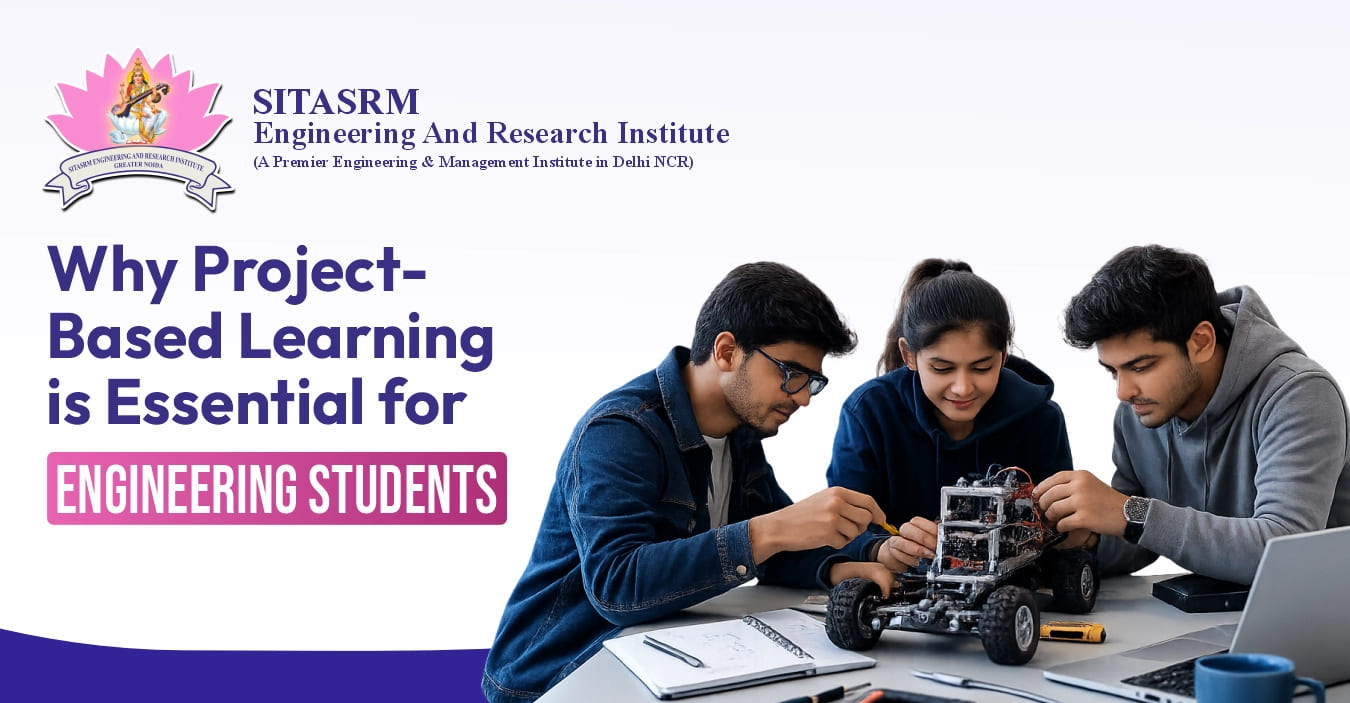
Why Project-Based Learning for Engineering is the Key to Success
Introduction
Imagine walking into a classroom where there are no heavy textbooks on the desks. Rather, the tables are covered in wires, motors, 3D-printed parts, and tablet screens showing lines of code. No one is yawning while a teacher drones on about theory. Rather, the room is buzzing with excitement because a team of students just got their drone to fly for the first time. This is not a scene from a sci-fi movie; it's the reality of project-based learning for engineering. This hands-on approach turns the "how" and "why" of science into a "watch me do this" moment. In this blog post, we will explore why this style of education is the secret weapon for any student who wants to build the future.
The Importance of Practical Learning in B.Tech
Many students spend four years memorizing formulas. They can pass a test, but they might not know how to fix a real machine. The importance of practical learning in B.Tech cannot be overstated. When you apply a formula to a real-world task, you understand why that formula exists.
Engineering is about action, involving the design of software, the construction of bridges, and the creation of engines. If a student only reads about these things, they miss the core of the profession. Practical learning fills the gap between theory and the real world. It makes the lessons stick in the mind because the student has seen the results with their own eyes.
How Project-Based Learning for Engineering Works
In a standard classroom, the teacher gives the answers. In a project-based environment, the teacher gives a challenge. This is the heart of project-based learning for engineering. Teachers might ask students to build a small solar car or design an app that tracks water waste.
To complete these tasks, students must research, plan, and execute. They fail, try again, and achieve success in the end. This cycle of trial and error is exactly how the professional world works. By using experiential learning, colleges ensure that students are not shocked when they start their first job. They have already practiced the "work" part of engineering while they were still in school.
Providing Hands-on Engineering Experience
You cannot learn to swim by reading a manual. Similarly, you cannot become a great engineer without hands-on engineering experience. This type of learning empowers students to master essential tools and software.
When students take part in real-world engineering projects, they learn how materials behave. They learn that a design that looks perfect on paper might break in real life. This experience builds confidence. A student who has built a working circuit board feels more capable than one who has just drawn a diagram.
Key Benefits of Project-Based Learning (PBL) in Education
PBL offers many benefits beyond technical skills. Here is why this method is so effective:
-
Better Memory: Students retain information more effectively through hands-on experience than through reading alone.
-
Teamwork Skills: Most projects involve group work. Students learn how to lead, how to follow, and how to communicate.
-
Critical Thinking: When a project fails, students must figure out why. This builds a problem-solving mindset.
-
Portfolio Building: When a student graduates, they have a list of finished projects to show employers, rather than a transcript.
This move to skill-based education means the degree shows real ability. So, it’s worth more than just the paper it’s printed on.
Bridging the Gap with Real-World Engineering Projects
The ultimate goal of any engineering college is to make students "industry-ready." Employers today do not want to spend months training a new hire on the basics. They want people who can jump in and contribute. By focusing on real-world engineering projects, colleges give students a head start.
These projects often mimic the exact tasks found in leading industry firms. Civil engineering students might create a small bridge. Meanwhile, computer science students could develop a database. The goal is the same: to simulate the professional world. This approach makes the transition from college to a high-paying job much smoother.
The Role of Innovation Labs
To make this happen, colleges must provide the right environment. Innovation labs provide unique spaces where students can use 3D printers, powerful computers, and heavy machinery. Here, a student’s idea can become a physical reality, encouraging them to dream big and take risks. By providing access to such specialized equipment, these labs ensure that project-based learning is practically achievable rather than just a concept. When a campus invests in these labs, it is investing in the future of its students.
Developing Soft Skills Through Projects
We often think of engineering as a lonely job behind a screen. In reality, it is very social. You have to talk to clients, explain ideas to managers, and work with other departments.
Through project-based learning for engineering, students naturally develop these "soft skills." They learn how to manage their time to meet deadlines. They learn how to handle disagreements within a team. These skills help engineers climb the career ladder into management roles later.
Why This Method is Essential Today
In the past, a degree alone was enough to secure a job, but today’s competition is fierce. With thousands of students graduating each year with the same credentials, hands-on engineering experience makes a candidate stand out.
Employers look for the 'doers'. They look for those who spend their weekends in the lab instead of just memorizing notes. By embracing the importance of practical learning in B.Tech, students prove they have the grit and the talent to handle the pressures of the modern workforce.
Furthermore, experiential learning helps students discover their passion. A student might realise they hate coding but love designing the physical casing for a gadget. Projects help students discover what they are good at before they commit to a career path.
How SITASRM Engineering and Research Institute Prepares You
Choosing the right college is the first step towards a successful career. At SITASRM Engineering and Research Institute, we believe that doing is the best way to learn. We don't just teach from books; we help you build your future.
We designed our campus to give you the best hands-on engineering experience possible. We have top-notch facilities and a curriculum that emphasises real-world engineering projects. This practical focus helps our students meet industry demands. Our focus on skill-based education to ensure you are ready for the global market the moment you graduate.
If you want to excel in your career and become a leader in the world of technology, SITASRM is the place for you. We provide the mentorship and the tools you need to turn your ideas into reality. Explore and learn more about our programs and how we can help you reach your goals. Join us and start building your future today!
Table Of Content
- Loading...
